
Camilla met some of science’s superstars in Lindau – “a truly unique experience”
At the meeting, Camilla Gottlieb Andersen represented neither her group leader nor her laboratory, but herself as a researcher. This opened the door to new perspectives, scientific discussions and connections across disciplines and career stages.

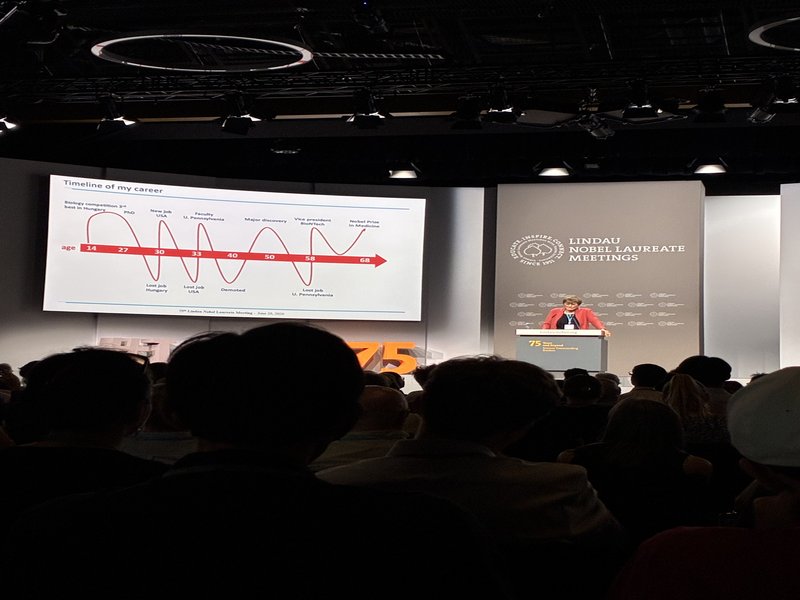
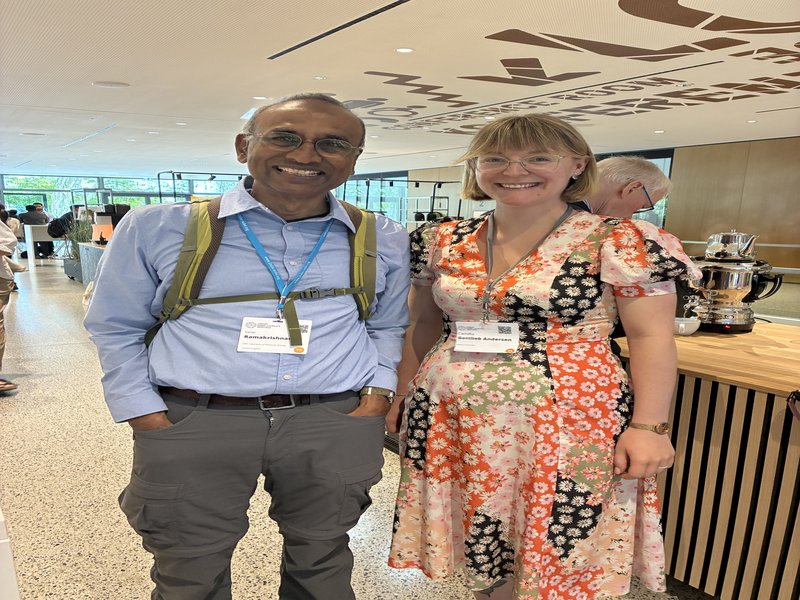
Every year, the small town of Lindau in the German state of Bavaria hosts a major scientific event. More than 600 postdoctoral researchers and PhD students take part in an informal gathering with over 70 Nobel laureates, who share their expertise and experience of working at the highest levels of research.
One of the 600 participants was Camilla Gottlieb Andersen, a postdoctoral researcher at the Department of Molecular Biology and Genetics.
“The Lindau Nobel Laureate Meeting is a truly unique experience, and I am very grateful that I had the opportunity to attend. It was incredible to be surrounded by people who, in many ways, have rock-star status in the scientific community – yet you can simply walk up to them and have a chat,” says Camilla Gottlieb Andersen.
The Lindau Nobel Laureate Meeting gives early-career researchers an opportunity to exchange knowledge, experiences and cultural perspectives with one another and with Nobel laureates.
They all have one thing in common: they are part of the research community. What makes the meeting particularly special is that the participants represent themselves, Camilla explains:
“When I attend the meeting, I don’t represent my group leader. I don’t represent the research we do in our research group. I don’t represent my previous research or any of the groups I used to be part of. I just represent myself as a researcher. And that is something very special.”
“We all come from the same world. We may not work in the same field, but we can relate to the structures and ways of working in one another’s groups, or to what it is like to be finishing a PhD and how difficult that can be.”
The meeting covers physics, chemistry, physiology or medicine and economics, while also addressing global challenges.
“Because the meeting is interdisciplinary, it brings together people from many different fields. That also means the discussions never become too narrow or overly focused on the niche details of any one person’s research. Among other things, we were encouraged to discuss the growing threat posed by the potential use of nuclear weapons – weapons that are, after all, products of discoveries in the natural sciences – and how researchers can contribute through solutions-focused science communication. It was extremely interesting.”
In addition to being a conference featuring some of the biggest names in research and a celebration of science, the meeting offers organisers and participants alike valuable opportunities to network, says Camilla Gottlieb Andersen.
“I will never experience anything like it again. The opportunities available to us as participants were absolutely incredible. We could speak to researchers, politicians and representatives of institutions. All you had to do was walk up to someone and ask, ‘Hey, who are you?’ You could also reach out and ask questions such as ‘What opportunities are available here?’, ‘What do you do?’ or ‘What is it like in the US right now?’”
Camilla therefore encourages anyone interested to look into the possibility of attending the meeting:
“I had never heard of the Lindau Nobel Laureate Meeting before, so I think we need to spread the word about this opportunity. It is not one to be missed.”