
Genetic breakthrough could boost faba bean cultivation in colder climates
With a newly identified genetic region in faba beans, researchers can now point to what makes the crop more robust in colder climates. The breakthrough could eventually create a stronger incentive to grow many more legumes, for example in Danish agricultural fields.

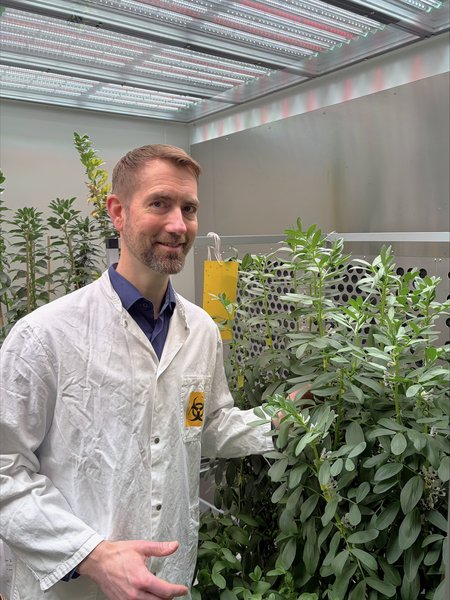
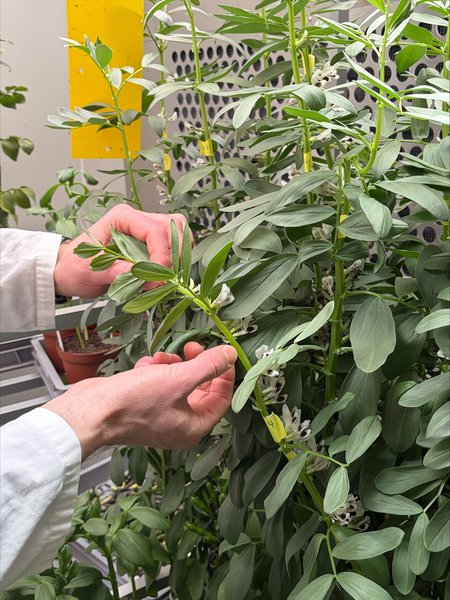
A more sustainable future includes a more plant-based diet. This is particularly relevant when following the official Danish dietary guidelines. Legumes play an important role here because they contain large amounts of protein and can serve as an alternative to animal products.
Legumes also have the special ability to fix nitrogen from the air, thereby reducing the need for synthetic fertilizers. However, to fully realize this potential, the crops must be able to grow locally. This can be challenging in the Danish climate, where cold winters and dry springs can affect yields.
A new genetic breakthrough
Professor Stig Uggerhøj Andersen from the Department of Molecular Biology and Genetics at Aarhus University, Professor Tae-Jin Yang from Seoul National University, and Assistant Professor Murukarthick Jayakodi from Texas A&M University have recently published a study in Nature Genetics presenting a possible solution.
In the study, the researchers developed a significantly improved reference genome for faba bean and identified more than 35,000 genes. By analyzing hundreds of faba bean lines including both winter and spring types they identified a key genetic region called FR-1 (Frost Resistance 1) that determines the plant’s ability to survive frost.
Winter faba beans are sown during the winter season as the name suggests and harvested in autumn. Spring faba beans are sown in spring and, like winter varieties, harvested in autumn. Winter faba beans often establish a larger root system than spring types.
“We have found that winter hardiness in faba beans is largely controlled by a specific genetic locus. In other words, the right allele at a particular location in the genome is crucial for whether the plant can survive the winter,” explains Stig Uggerhøj Andersen.
The region contains genes that are activated at low temperatures and help the plant adapt to cold conditions.
Could lead to more stable yields
With this new knowledge, it may be possible to improve winter hardiness in faba beans so that the crop becomes more robust and better suited to cooler climates. If faba beans can be sown in winter, the plants can establish a strong root system before spring arrives. This can make them more resilient to both frost and drought, thereby increasing yield stability.
“Yield stability is one of the biggest challenges when growing legumes. They are often perceived as more sensitive than other crops. If we can increase their resilience to drought and other climate challenges, it will become much more attractive for farmers to cultivate them,” says Stig Uggerhøj Andersen.
In the long term, the results may help increase the production of plant-based protein in Europe and contribute to more sustainable agriculture.
Danish funding for the faba bean activities from GUDP has been crucial for the study. The Green Development and Demonstration Programme (GUDP) supported the IMFABA project directly and ProFaba through the European SusCrop ERA-NET Cofund programme, with Professor Stig Uggerhøj Andersen from Aarhus University serving as coordinator for both projects.
About the research
Study type:
Scientific publication
External funding:
Leibniz Association, European Union’s Horizon 2020 Programme for Research & Innovation, Joint Programming Initiative on Agriculture, Food Security, and Climate Change, Green Development and Demonstration Programme (GUDP), Czech Science Foundation, Cooperative Research Program for Agriculture Science and Technology Development, National Research Foundation of Korea (NRF), Korea Atomic Energy Research Institute, ERDF Programme Johannes Amos Comenius.
Conflict of interest:
OS and GW are employees of NPZ Innovation (NPZi) GmbH. All other authors declare no competing interests.
Link to the scientific article:
Nature Genetics
Contact:
Stig Uggerhøj Andersen
Molecular plant genetics, Professor
Department of Molecular Biology and Genetics
sua@mbg.au.dk