
Nikolai Lorenzen: Protein aggregation – the dark side of proteins?
PhD defence, Friday 28 February 2014. Nikolai Lorenzen.
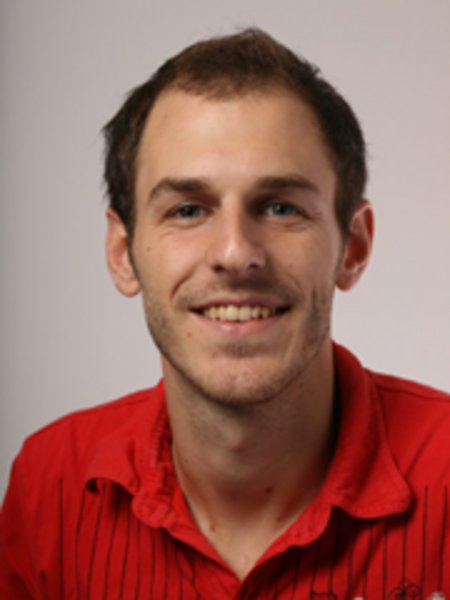
The aggregation of proteins into oligomers and amyloid fibrils is associated with different neurodegenerative conditions such as Alzheimer’s, Parkinson’s and Huntington’s disease. The amyloid deposits found in Parkinson’s disease – so-called Lewy bodies – are primarily built up by the protein ?-synuclein. The aggregation process of ?-synuclein is a common target in drug discovery studies aimed at Parkinson’s disease.
During his PhD studies, Nikolai Lorenzen focused on different aspects of protein misfolding and aggregation, including the aggregation reaction of amyloid fibrils of both ?-synuclein and the ribosomal protein S6 into amyloid fibrils. He also characterised the structure of ?-synuclein oligomers and their role in amyloid fibril formation. In addition, he analysed how these oligomers damage membranes, which might be a key event in neurodegeneration.
The new research findings contribute to the understanding of the process of amyloid fibril formation and the structure and toxicity of ?-synuclein oligomers.
The PhD degree was completed at the Interdisciplinary Nanoscience Centre (iNANO), Science and Technology, Aarhus University.
Time: Friday 28 February 2014 at 13.15
Place: Lecture Theatre, iNANO House, building 1593, room 012, Aarhus University, Gustav Wieds Vej 14
Title of dissertation: Amyloid Fibrils and Oligomers
Contact information: Nikolai Lorenzen, nikolai@inano.au.dk, +45 2095 2592
Members of the assessment committee:
Professor Vinod Subramaniam, Nanobiophysics Group, University of Twente, the Netherlands
Professor Niels H. H. Heegaard, Department of Clinical Pharmacology, University of Southern Denmark
Associate Professor Rikke Louise Meyer (chair), iNANO and Department of Bioscience, Aarhus University
Main supervisor:
Professor Daniel Otzen, iNANO and Department of Molecular Biology and Genetics, Aarhus University
Language: The dissertation will be defended in English
The defence is public.
The dissertation is available for reading at the Graduate School of Science and Technology/GSST, Ny Munkegade 120, building 1521, room 112, 8000 Aarhus C.