
Oliver Kjærlund Hansen - Modelling nucleotide context of mutational processes in germline
PhD defence Thursday 5 March 2026
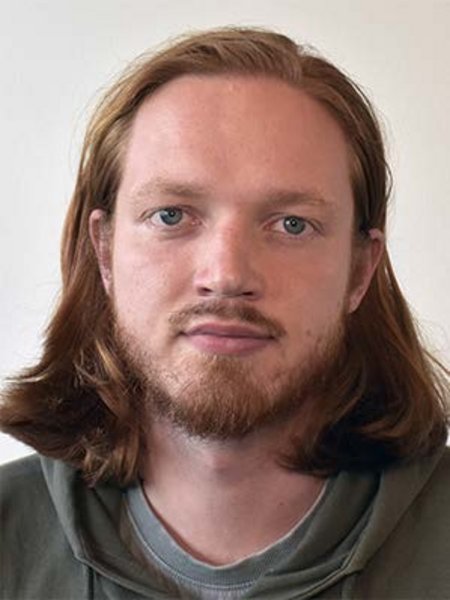
The defence is public and takes place on March 5th 2026, at 13:00
Location: Auditorium, Ground floor, Building D/E, Department of Molecular Medicine, Brendstrupgårdsvej 21A, 8200 Aarhus N.
Titel: Modelling nucleotide context of mutational processes in germline.
Contact: PhD student Oliver Kj. Hansen, email: oliver@clin.au.dk, Phone +45 20434305
Assessment committee:
Fran Supek, Professor at Biotech Research and Innovation Centre (BRIC), University of Copenhagen
Marketa Tomkova, Leadership Fellow at Ludwig Cancer Research Institute, University of Oxford
Johan Palmfeldt, Associate Professor at Research Unit for Molecular Medicine (MMF), Department of Clinical Medicine, Aarhus University.
Main supervisor: Søren Besenbacher, Associate Professor at the Department of Molecular Medicine (MOMA), Department of Clinical Medicine, Aarhus University, Denmark.
Research investigates why some parts of our DNA mutate more than others
Every person’s DNA carries small changes, known as mutations. These mutations are essential for evolution, but they may also contribute to genetic disease. The biological processes that generate mutations in the human germline are not fully understood, particularly those that cause short insertions and deletions of DNA (InDels). Although it is important, it has not been clear why some parts of our DNA mutate more often than others. While many studies have reported on single DNA changes, depending on the adjacent DNA, few have attempted to disentangle the landscape in a larger DNA context, including for InDels. The project was carried out by Oliver Kj. Hansen, who is defending his dissertation on March 5th, 2026 InDels have been difficult to study due to classification challenges. Using a data-informed approach, five distinct InDel mutation signatures are identified across the human genome. These signatures reveal influences of DNA replication and transcription, including pronounced strand asymmetries in which mutation patterns differ depending on the direction of these processes. Utilising human germline mutations, we developed statistical models to explain how DNA sequence context and broader genomic properties shape mutation rates. By using extended stretches of DNA surrounding each mutation, together with features such as DNA methylation, replication timing, and recombination, the work provides improved estimates of mutation rates at single-site resolution. These models outperform existing approaches and can be used to quantify the extent to which genes are constrained against harmful mutations, an important step towards understanding genetic disease risk.