
Simona Radutoiu awarded ERC advanced grant for research on plant–microbe interactions
Professor Simona Radutoiu from the Department of Molecular Biology and Genetics has been awarded a prestigious European Research Council (ERC) Advanced Grant for her project ProMIC (Plant Root Coordinated Signalling During Microbiota Establishment).

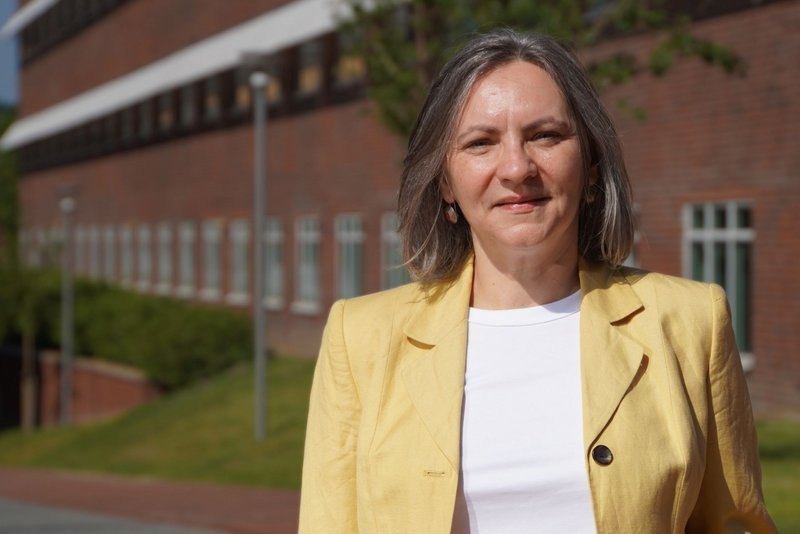
The ERC Advanced Grant is among Europe’s most competitive research funding schemes, supporting established scientific leaders with ambitious, high-impact projects. The five-year grant of up to 2.5 million Euros recognises Simona’s contributions to the fundamental understanding of how plants recognise and control the interactions with soil microbes and will enable her team to advance our knowledge of how plants coordinate their root responses to complex microbial infections.
Plant receptors controlling microbial infections
Plants live in close association with a wide range of well-selected soil microorganisms – collectively known as the microbiota – which play essential roles in plant health, growth, and resilience. These microbes are supported by carbon-rich compounds secreted from the roots into the soil or inside root cells infected by compatible microbes. Together, plants and their associated microbes form a dynamic and complex ecosystem. It is known that plants can respond, accommodate, and tightly control multiple microbial interactions on the same root, but we lack an understanding of the mechanisms behind this ability. Understanding the basic molecular principles coordinating the complexity of these interactions represents an ambitious challenge not only for plants but for all other multicellular organisms. The central aim of ProMIC is to understand how signalling from surface receptors enables plants to recognize, control, accommodate, and benefit from multiple microbial infections.
Receptor proteins are like gatekeepers, providing plants with the first information about the upcoming type of microbes. They are located on the surface of the plant cells and recognise molecules released in the environment by the microbes and trigger distinct signalling cascades that help plants to reprogram their responses. LysM receptors are evolutionary conserved surface proteins that allow plants to recognize both beneficial and pathogenic microbes leading to symbiosis or immunity. ProMIC will study how these LysM receptors and the interplay of their downstream signalling allow plants to structure microbial infections across the root in space and time and by this, balance the costs and benefits of hosting diverse microbes on and inside their roots.
Sustainable agricultural practices
Plant fitness and resilience depend heavily on interactions with diverse microbial communities, but so far, plant breeding has largely overlooked below-ground microbial interactions. ProMIC has the potential to reveal groundbreaking discoveries, including key genetic components and molecular networks that enable plants to optimize cost-benefits: how fixed carbon should be used to support different microbial infections. Collectively, these novel components aim to enhance crop performance and reduce the environmental footprint of crop production.
“This project seeks to uncover the rules that govern how plants interact with and coordinate complex microbial infections,” said Professor Radutoiu. “Understanding these mechanisms is key to unlocking more sustainable ways of supporting plant health and productivity.”
Contact details:
Professor Simona Radutoiu
Department of Molecular Biology and Genetics, Aarhus University
Phone: +4587155498
Email: radutoiu@mbg.au.dk