
Susanne Trillingsgaard Venø: Why do we get old? The potential role of the Suv3 protein in maintaining the cell’s genome
PhD defence, Friday 20 September 2013. Susanne Trillingsgaard Venø.
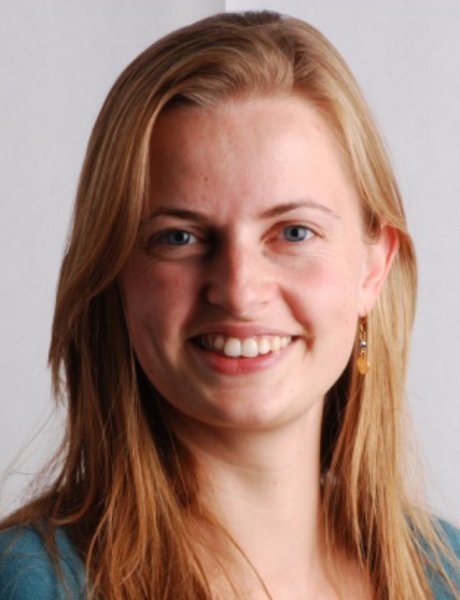
During her PhD studies, Susanne Trillingsgaard Venø carried out research into the role of the human Suv3 protein in stabilising the human genome – DNA. Suv3 is a helicase that separates the two strands of the DNA’s double helix.
Throughout our lives, the DNA in our cells is constantly exposed to damage and this DNA damage accumulates as we get older. This accumulation of damage leads to a reduction in the function of the body’s organs, which can have a significant impact on the quality of life in our old age, as well as our lifespan. To enjoy a high quality of life free of illness therefore means that our cells must have some good tools to protect and repair our DNA.
Studies on mice have previously shown that a reduced level of the Suv3 protein causes the DNA of the mice to be less stable and more susceptible to damage. In addition, the mice age and die earlier than normal. In connection with her PhD project, Susanne Trillingsgaard Venø studied whether the Suv3 protein could be one of the cellular tools that contribute to maintaining DNA. By studying which other proteins the Suv3 works with in the cell, she produced completely new results that show how Suv3 can play a direct role in DNA maintenance.
Based on these new research results, the Suv3 protein could be a valuable model for genome stability as an important factor in our understanding of why we get old.
The PhD degree was completed at the Department of Molecular Biology and Genetics, Science and Technology, Aarhus University.
Time: Friday 20 September 2013 at 13.30
Place: Lecture Theatre G1, Department of Mathematics, Aarhus University
Title of dissertation: New roles of the human Suv3 helicase in genome maintenance
Contact information: Susanne Trillingsgaard Venø, stv@mb.au.dk, +45 2991 6166
Members of the assessment committee:
Professor Lars Eide, Department of Medical Biochemistry, University of Oslo, Norway
Professor Lene Juul Rasmussen, Department of Cellular and Molecular Medicine, University of Copenhagen
Associate Professor Anni H. Andersen (chair), Department of Molecular Biology and Genetics, Aarhus University
Main supervisor:
Associate Professor Tinna Ventrup Stevnsner, Department of Molecular Biology and Genetics, Aarhus University
Language: The dissertation will be defended in English
The defence is public.
The dissertation is available for reading at the Graduate School of Science and Technology/GSST, Ny Munkegade 120, building 1521, room 112, 8000 Aarhus C.