
Researchers aim to make chickpeas ready for Nordic fields
A new research project at Aarhus University will identify the chickpea varieties and genes that could make this protein-rich crop suitable for cultivation in Denmark and Northern Europe.

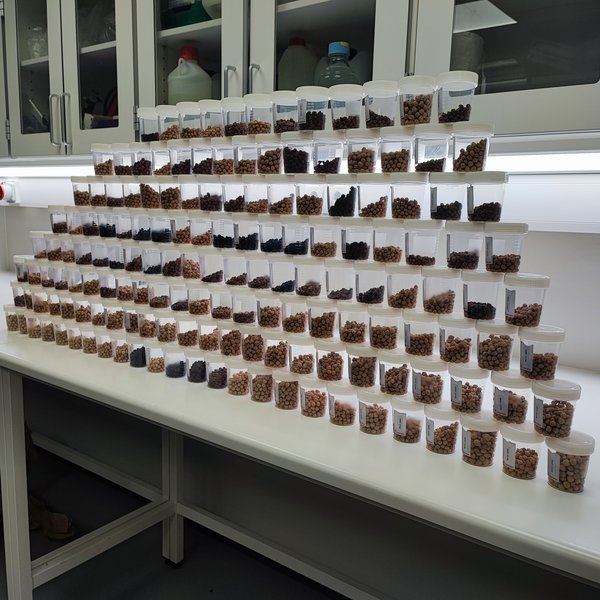
Global demand for plant-based proteins is increasing due to health, climate and animal welfare concerns. One promising protein-rich crop is the chickpea, which has a protein content of approximately 18–22%. Today, chickpeas are mainly grown in warmer climates, which means they often have to be transported over long distances - an approach that is not environmentally ideal.
“The CicerNord project will investigate how chickpeas can be adapted to the short growing seasons and climatic conditions in Denmark and the rest of Northern Europe. A key goal is to identify early-maturing chickpea varieties that can reach maturity before the wet Nordic autumn months reduce yield and quality.” says Assistant Professor at Department of Molecular Biology and Genetics and project leader Aleksandr Gavrin.
The project’s first field trial starts in week 19, when 150 chickpea accessions will be sown in a trial field located between Aarhus and Randers. This is an important step for the project, as the researchers expect to have the first indications within approximately four months of whether some of the accessions are suitable for cultivation under Danish conditions.
Danish farmers have already trialled chickpea cultivation, but they have faced challenges with a high proportion of immature green seeds and relatively low yields. One reason for this is the chickpea plant’s growth habit: the plants can continue growing as long as there is moisture in the soil, which delays seed maturation.
The researchers have access to a large collection of genetically diverse chickpeas: 398 varieties, landraces and breeding lines from around the world, all of which have already been genetically sequenced. A selected group of 150 genetically diverse chickpeas has been tested for seed quality, germination and vigour under conditions resembling those in central Jutland in late April. The results show surprisingly high cold tolerance, with 90% of the seeds germinating under cold conditions.
The project combines field trials, laboratory experiments and genetic analyses to identify the traits and genes that are important for early maturation, yield, nitrogen fixation and nutritional quality. Chickpeas can form symbioses with soil bacteria that fix nitrogen from the air. This can reduce the need for synthetic fertilisers and thereby lower the climate footprint of agriculture. The researchers will also investigate the nutritional quality of the chickpeas, including protein content and antinutritional compounds, and compare them with other protein crops such as soybeans and faba beans.
“Industrial partners in the project will also assess how selected chickpea varieties perform in cooking, processing and food production, ensuring that future varieties meet the needs of both consumers and the food industry” says Aleksandr Gavrin. In the long term, the project could provide farmers in Northern Europe with a new local protein crop that can strengthen food supply, reduce dependence on imports and open new markets for plant-based foods.
“The aim is not to launch a finished variety immediately, but to establish an important foundation for the future breeding of chickpeas adapted to Nordic growing conditions” says Aleksandr Gavrin.
The project has received a grant of DKK 3,997,284 from Plant2Food.