
New research to help crops fight harmful microbes without compromising growth
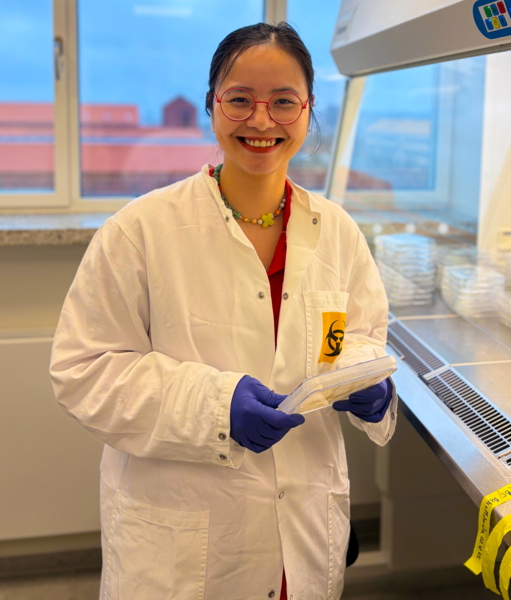
Assistant Professor at the Department of Molecular Biology and Genetics, Thi Bich Luu, has received DKK 3,564,503 from Danish Independent Research Fund through the Inge Lehmann Programme for a research project that will shed new light on how plants can strengthen their immune systems without inhibiting their growth.

Plants are constantly exposed to attacks from harmful microorganisms and must at the same time grow and produce the foods we rely on. When plant immune systems are strengthened, it often comes at the expense of growth, which can lead to lower yields. This balance between growth and defence represents one of the greatest challenges in modern agriculture.
In her project, Thi Bich Luu is studying special plant proteins, known as receptors, which detect microbes and activate the plant’s defence mechanisms. Thi Bich Luu’s previous research has shown that some of these receptors not only increase plants’ resistance to pathogens, but also inhibit their growth.
“We know that the same receptors can control both immune responses and growth. My goal is to understand which parts of the receptors regulate growth and immunity respectively, so that we can separate the two functions,” explains Thi Bich Luu.
Stronger plants, greater sustainability
With the new grant, it will be possible to systematically map the structure and function of the receptors. In the long term, the results may pave the way for developing crops that are both robust against harmful microbesand able to maintain high yields.
“The goal is to develop a strategy to fine-tune plant immunity so that crops can protect themselves effectively while still growing well - an important step towards more sustainable agriculture,” says Thi Bich Luu.
The project is supported by the Inge Lehmann Programme under the Danish Independent Research Fund, which supports talented researchers in carrying out ambitious and groundbreaking research projects.