
Stefanie Bechstein: Chitosan and chitosan particles against intestinal E. coli infections
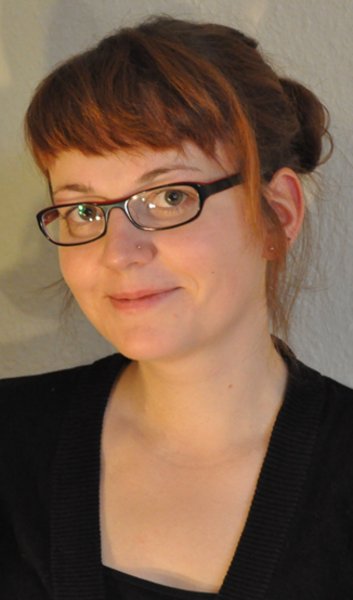
PhD defence, Wednesday 27 March 2013. Stefanie Bechstein.
Escherichia coli (E. coli) infections – especially in the intestines – are a neglected subject in scientific research. More than one million people die of diarrhoea and related complications every year.
Until now, finding satisfactory treatment has been impossible because medicines such as the antibiotics currently used can lead to resistance or serious side effects. A new treatment option is therefore necessary – one that is capable of preventing infection as well as having an effect on established infections.
Chitosan is a good choice. It is a natural polymer found in shellfish and it has antibacterial activity. In her PhD project, Stefanie Bechstein used both chitosan and a peptide from fish that has an antibacterial effect. An oral delivery route must be used to reach the intestines, but peptides are often destroyed in the stomach. Coating the active components is therefore important, and chitosan can help here, thus increasing the amount of peptide that reaches the target. In her scientific work, Stefanie Bechstein used a combination of both molecules. To produce particles, she used a spray-drying technique as well as a double emulsion-evaporation method and nanoprecipitation.
The PhD degree was completed at the Interdisciplinary Nanoscience Centre (iNANO), Science and Technology, Aarhus University.
Time: Wednesday 27 March 2013 at 12.30
Place: Lecture Theatre, iNANO House, building 1593, room 012, Gustav Wieds Vej 14, 8000 Aarhus C
Title of dissertation: Chitosan and chitosan-based particle systems containing a bioactive fish peptide in the abatement of Escherichia coli related infections in the small intestine
Contact information: Stefanie Bechstein, stefanie@inano.au.dk
Members of the assessment committee:
Professor Karin Schwarz, Food Technology, Institute of Human Nutrition and Food Science, Kiel University, Germany
Professor Ioannis S. Chronakis, National Food Institute, Technical University of Denmark
Professor Daniel Otzen (chair), iNANO and Department of Molecular Biology and Genetics, Aarhus University
Main supervisor:
Professor Jørgen Kjems, iNANO and Department of Molecular Biology and Genetics, Aarhus University
Language: The dissertation will be defended in English
The defence is public.
The dissertation is available for reading at the Graduate School of Science and Technology/GSST, Ny Munkegade 120, building 1521, room 112, 8000 Aarhus C.