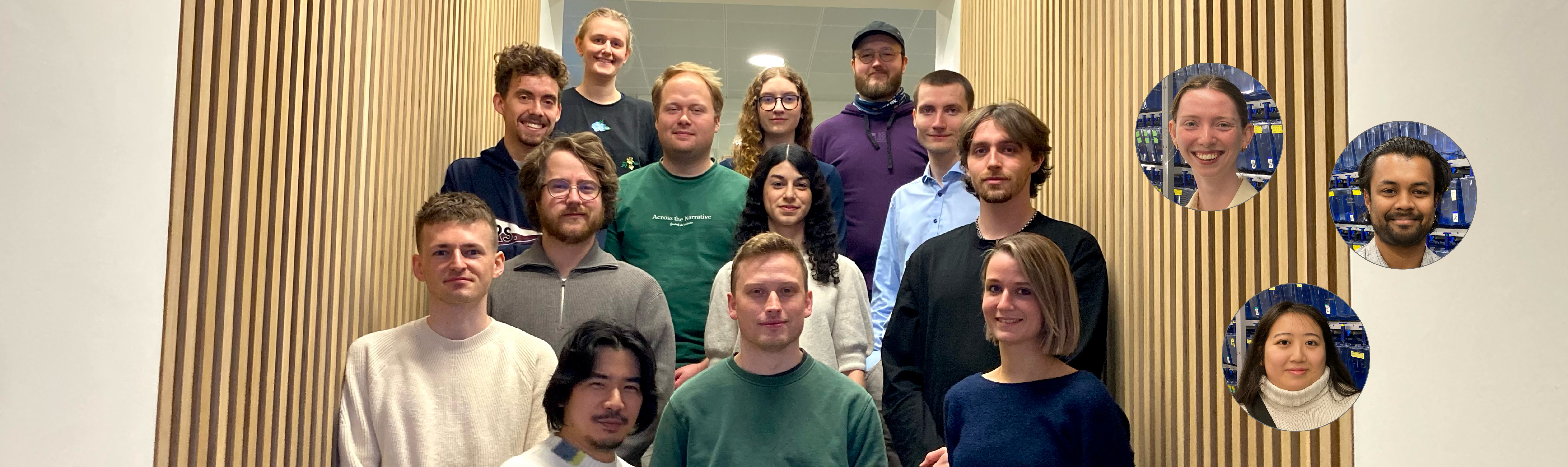
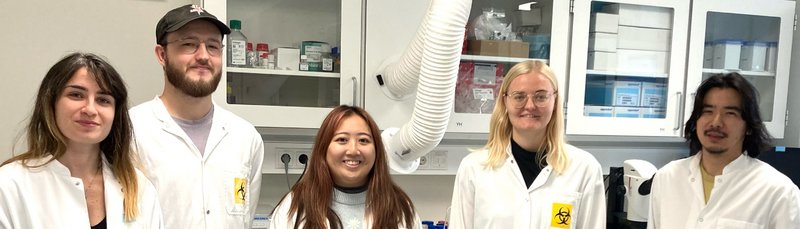
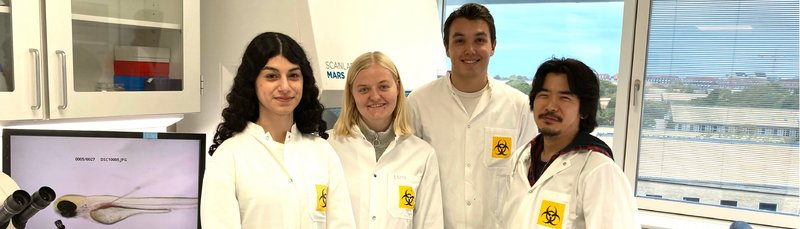
The official language in the group is English, and our neighbours – the groups led by Dr. Gilles Vanwalleghem, Dr. Vera van der Weijden and Prof. Daan van Aalten – are also pretty much internationals, too. We are in an environment where you hear people speaking English in the corridors. If you like to experience an extraordinary work place (in a good way!) with an aim to increase your international competence for your future career, come and join us ;)

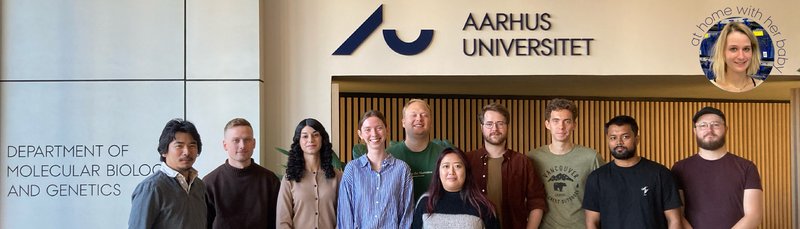
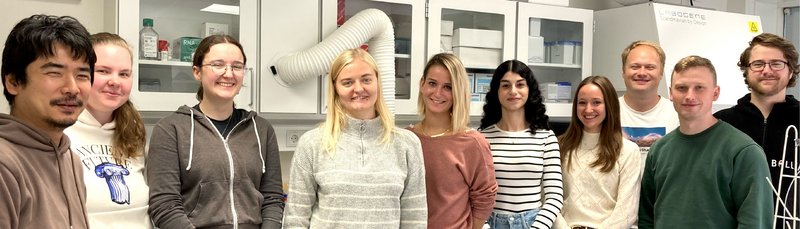
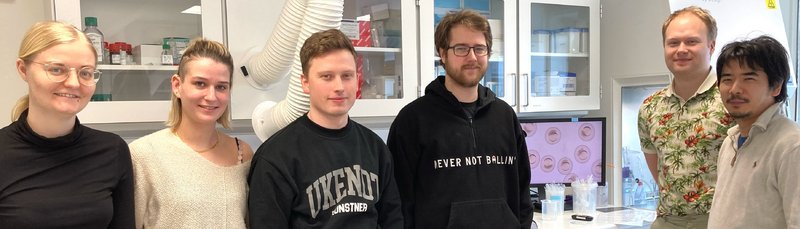

Associate Professor / Group leader

Yuya obtained BSc in Environmental Biology at the University of Reading, U.K., in 2007, with a thesis project on the environmental impact of the common pharmaceutical ibuprofen on the model organism Daphnia magna (he subsequently managed to publish the work in the journal Ecotoxicology!). It was around this time that his passion in life science started, and he moved to Denmark setting off on an entirely new journey exposing himself to the facinating world of Nanoscience at Interdisciplinary Nanoscience Center (iNANO), Aarhus University. He thus completed 5 years of the PhD programme in 2014 with a number of publications on the nanoparticle-protein interactions and how they are recognized by earthworm immunocytes as a model of innate immunity. Continuously supported by external funding, he has strived to develop his own scientific career as an independent postdoc researcher working on a zebrafish model for bionanoscience studies (2015-2019) and as a junior group leader diving into the emerging field of extracellular vesicles (2020-2022). Now with the prestigious group starting grant awarded from Novo Nordisk Foundation, he is establishing Laboratory for EVomics and Regenerative Nanomedicine (with co-affiliation to iNANO) to merge his expertise on extracellular vesicles and nanomedicine starring zebrafish as his favourite model organism.
Postdoc (Mar 2024 – )
Camille is the proteomics expert in the group who challenges the norm by studying extracellular vesicles from the cell's point of view – a wild project funded through the Villum Experiment scheme. She combines state-of-the-art genetic and proteomic approaches, in cells and zebrafish as a model system, to profile the interactions between extracellular vesicles and proteins forming the so-called "biomolecular corona".
Postdoc (Jun 2026 – )
Mason is the RNA expert in the group who tackles the well-acknowledged but inconclusive hypothesis of cell-to-cell communication via extracellular vesicles – a challenging-the-norm kind of project funded through the Lundbeck Foundation Experiment scheme. He uses genetic engineering approaches to study and establish the donor-recipient relationship of extracellular vesicles in zebrafish embryos tracing the genetic records of the proof that there was a transfer of the biomolecular cargo. Mapping of such events will be combined with transcriptomics to uncover the role of extracellular vesicles in the central nervous system.
PhD student (Mar 2024 – )

Nicklas is the second PhD student of the group funded by Novo Nordisk Foundation. He has a solid background in RNA biology, based on which he is now stepping into the world of RNA origami. He focuses on development of multifunctional RNA origami nanoscaffolds that can light up, sense the local milieu, and release embedded RNA strands to reprogramme the target cells using zebrafish embryos as an in vivo model of systemic delivery via the intravenous route.
PhD student (Aug 2025 – )

Sophia is the third PhD student of the group on a project funded by Novo Nordisk Foundation. The project aims at developing a novel technology named DRONE – Delivery of RNA Origami Nanoscaffolds via Exosome. The idea is to combine the two pillars of our research, extracellular vesicles and RNA origami, with an ultimate goal to realize "homing nanomachines" that search and repair organs from inside our body, as needed. She did her Master's degree here at iNANO and the Department of Molecular Biology and Genetics with a thesis on RNA nanoflower. She will integrate this knowledge into the "biogenesis" of RNA origami nanoscaffolds with subsequent loading into extracellular vesicles.
MSc student (Aug 2025 –, Aug 2023 – Mar 2024); BSc student (Feb 2023 – June 2023)

Kåre is an MSc student at the Department of Molecular Biology and Genetics. In his Bachelor's thesis project, he designed a number of DNA constructs to study intra-/intercellular trafficking of extracellular RNA in cell cultures. His thesis work extended to a Molecular Biology Project to test the constructs in zebrafish to visualize putative carriers of miRNA in the extracellular space. He is now working on his Master's thesis to further characterize the miRNA carriers using genetic approaches.
MSc student (Aug 2026 – ); BSc student (Jan 2026 – Jun 2026)

Markus was a BSc student at the Department of Molecular Biology and Genetics. For his Bachelor's thesis, he took on a satellite project linked to DRONE where extracellular vesicles were genetically engineered to force delivery of their biomolecular cargo by incorporating a viral fusogen. This process was successfully tested and visualized in vivo using zebrafish embryos. He has an interest in structural biology, and in the Molecular Biology Project he plans to dive into the world of RNA origami to be loaded into extracellular vesicles.
MSc student (expected return in Feb 2027); BSc student (Jan 2026 – Jun 2026)
Marthias was a BSc student at the Department of Molecular Biology and Genetics. As a satellite project linked to DRONE, his Bachelor's thesis project involved engineering of extracellular vesicles via genetic approaches that exploited a phage-derived protein for loading of mRNA that codes for a new pH-sensitive fluorescent reporter protein. This was tested and visualized in vivo in zebrafish emrbyos.
MSc student (Aug 2026 – ); BSc student (Jan 2026 – Jun 2026)

Paraskevi was a BSc student at the Department of Molecular Biology and Genetics. For her Bachelor's thesis, she worked on genetic engineering of neuron-derived extracellular vesicles with a dual reporter system, which was tested and visualized in vivo using zebrafish embryos, even in combination with a chemically-induced stroke model to explore the role of the neuron-derived extracellular vesicles on neuroinflammation. For a Molecular Biology Project, she will continue to work on this interesting and unexplored topic in a greater detail.
BSc student (Aug 2026 – )
Damien is an exchange BSc student visiting from the University of Montpellier, France. He has joined the group with a plan of carrying out two project courses spanning the whole academic year; Molecular Biology Project and Experimental Bachelor's Thesis Project. In his projects, he will establish the use of glial cell-specific regulatory elements in our genetic engineering approaches, starting from the basic Tol2 transgenesis constructs to more advanced expression cassettes for labelling and functionalization of extracellular vesicles derived from glial cells. These new constructs will be tested in zebrafish embryos as a model organism for studying neurobiology along with cell type-specific regulatory elements for neurons and endothelial cells characterizing the brain tissue architecture.
BSc student (Jan 2026 – Jun 2026)
Eva Maria was a BSc student at Interdisciplinary Nanoscience Center (iNANO). Her Bachelor's thesis was linked to the Villum Experiment project on identifying proteins involved in corona formation on extracellular vesicles. Working closely with Camille, she used zebrafish embryos as a model system that allowed genetic engineering of extracellular vesicles for in vivo corona fingerprinting. She experienced how a new method is developed in a real research environment and managed to make an excellent summary report out of chaotic trials of different methods. She is now abroad for an exchange semester.
MSc student (Feb 2025 – Jun 2026)

Jawed was an international MSc student at the Department of Molecular Biology and Genetics. He worked on RNA origami nanostructures for a Molecular Biology Project to characterize the binding kinetics of fluorogenic aptamer-ligand interaction. His Master's thesis project was then aimed at evolving the fluorogenic aptamer approach into a dual-reporter system that was screened and tested in zebrafish embryos. This project opened up an exciting opportunity of developing “plug 'n' play” RNA origami nanoscaffolds.
MSc student (Aug 2025 – Jun 2026, Aug 2024 – Jan 2025); BSc student (Feb 2024 – Jun 2024)

Jonas was BSc/MSc student at the Department of Molecular Biology and Genetics. His Bachelor's thesis project was to study wound-induced changes in the protein cargo of extracellular vesicles using a zebrafish model. As a side project, he also designed a plasmid construct for transgenesis in zebrafish to study extracellular vesicles during tissue regeneration. Inspired by his great scientific curiosity, for his Molecular Biology Project he was entrusted with a collaboration work in which the zebrafish model was used to study kinetics of extracellular vesicle secretion and uptake. He subsequently worked on his Master's thesis project on establishing zebrafish xenograft models that brought together the successful outcome of the preceding project and his current research interest in glioblastoma extracellular vesicles.
MSc student (Feb 2025 – Jun 2026); BSc student (Feb 2024 – Jun 2024)

Ebbe was a BSc/MSc student at the Department of Molecular Biology and Genetics. In his Bachelor's thesis project, he developed a number of very successful plasmid constructs that were transfected into zebrafish embryos for labelling and capturing of extracellular vesicles. He came back to the lab for a Molecular Biology Project and his Master's thesis to apply this method for studying neuron-derived extracellular vesicles in spinal cord injury.
MSc student (Aug 2024 – Jun 2026); Erasmus+ intern (Oct 2022 – Jan 2023)

Beti was an intern student (BSc, Molecular Biology and Genetics) from Demiroglu Bilim University, Turkey. Following graduation from her home university, she visited here for an internship through the Erasmus+ programme to learn common and advanced techniques used for the zebrafish model in nanomedicine. In particular, she was trained in microinjection of various nanoparticles including those used in nucleic acid nanotechnology. She then returned to the group as an international MSc student formally admitted to the graduate programme here at Aarhus University. She followed up on her previous project on RNA origami in her Molecular Biology Project and Master's thesis with a particular focus on loading of mRNA and aptamer into extracellular vesicles in vivo in zebrafish.
Erasmus+ trainee (Sep 2025 – Jun 2026)

Lennart was a visiting BSc student (Molecular Medicine) from Eberhard Karls University of Tübingen, Germany, partly covered by the Erasmus+ programme. His internship was planned for 9 months to master basic molecular and cell biology techniques in a real research environment through supporting research projects where zebrafish embryos are used as a study model for extracellular vesicle biology and RNA therapeutics. During the entirety of his internship, he was responsible for maintaining cell cultures for general transfection experiments but also for xenografting in zebrafish embryos (teaming up with the MSc student Jonas). Besides cell work, he learnt molecular biology techniques common to the group (e.g. plasmid construction, Western blotting, etc.), general handling of zebrafish embryos, and bioimaging. Not only learning, but also was he a trainer for three BSc students whose thesis projects started with plasmid construction. Without his support, it would not have been possible for the group to accommodate 6 MSc and 4 BSc thesis students at once in an academic semester!
MSc student (Feb 2025 – Apr 2026, Aug 2023 – Mar 2024); BSc student (Feb 2023 – June 2023)

Danna was a BSc/MSc student at the Department of Molecular Biology and Genetics. Her Bachelor's thesis project was to study wound-induced expression of genes involved in endothelial biology and inflammation in a zebrafish model using a multivariate and network biology approach. She continued this work for a molecular biology project to look at changes in the miRNA cargo of endothelial cell-derived extracellular vesicles in order to correlate miRNA-mRNA profiles in tissue regeneration. Her Master's thesis project was to deepen the mechanistic understanding in the homeostatic role of extracellular vesicles. And she makes lovely drawings!
Erasmus+ intern (Jan 2026 – Mar 2026)

Kamil was a guest PhD student (Medical Sciences) from Mossakowski Medical Research Institute, Polish Academy of Sciences, Poland. He received two project grants to study developmental neurotoxicity of plastic nanoparticles in vitro and in vivo, through which to expand his research toolbox by learning methods applied in the extracellular vesicle field. As the principal investigator of the new projects, he visited our lab as an ERASMUS+ intern for 3 months to acquire hands-on training of EV isolation and characterization techniques such as size-exclusion chromatography, immunopurification, small-particle flow cytomerty, nanoparticle tracking analysis and cryo-electron microscopy. On the other hand, he gained experience with zebrafish embryo models taking part in the ongoing research in our group through characterization of extracellular vesicles isolated and purified from transgenic zebrafish lines.
Research assistant (Apr 2024 – Feb 2025); PhD student (Aug 2022 – Mar 2024)

Rikke was the very first PhD student of the group funded by Novo Nordisk Foundation. She did her Master's degree here at the Department of Molecular Biology and Genetics with a thesis on milk extracellular vesicles. She worked on the basic biology of extracellular vesicles with a main focus on their cargo – microRNA, a type of RNA that can regulate gene expression and thus is said to drive cell-to-cell communication. She was the one who assisted the group's initial growth by training of new group members through her expertise in live imaging of extracellular vesicles in zebrafish embryos and general molecular biology techniques.
MSc student (Sep 2024 – Jan 2025)

Denise was an international MSc student at the Department of Molecular Biology and Genetics. She joined the group for her Molecular Biology Project on RNA origami nanostructures with a particular focus on the use of fluorogenic aptamers in zebrafish embryos.
Erasmus+ trainee (Sep 2024 – Dec 2024)
Margarita was a visiting BSc student (Molecular Biology) from Bielefeld University, Germany. She was here for traineeship through the Erasmus+ programme to learn common techniques used in genetic engineering and extracellular vesicle biology as the study theme. She was trained in plasmid construction, general handling of zebrafish embryos, microinjection, bioimaging, and academic presentation skills.
Erasmus+ trainee (Sep 2024 – Dec 2024)
Marie was a visiting BSc student (Molecular Biology) from Bielefeld University, Germany. She was here for traineeship through the Erasmus+ programme to learn common techniques used in genetic engineering and extracellular vesicle biology as the study theme. She was trained in plasmid construction, general handling of zebrafish embryos, microinjection, bioimaging, and academic presentation skills.
Erasmus+ intern (Apr 2024 – Jul 2024)

Eliza was an intern student (MSc, Molecular Biology) from the University of Zagreb, Croatia. Shortly after defending the MSc degree at her home university, she arrived here for an internship through the Erasmus+ programme to learn molecular biology techniques used in the lab. In her project, she made a number of plasmid constructs for engineering of functional extracellular vesicles into which mRNA with a specific motif can be selectively loaded, using zebrafish embryos as a model system.
Erasmus+ intern (Sep 2023 – Dec 2023)
Marta was an intern student (MSc, Medical, Veterinary and Pharmaceutical Biotechnology) from the University of Florence, Italy. Seeking new opportunities abroad after an MSc degree in the biomedicine field, she carried out an exploratory project on the extracellular vesicle biology of neuroinflammation. The main focus of the training was to learn the techniques to study endogenously-labelled extracellular vesicles and to combine them with a zebrafish model of strokes and traumatic brain injuries.
BSc student (Feb 2023 – Aug 2023)

Agnes was a BSc/MSc student at Interdisciplinary Nanoscience Center (iNANO). Her Bachelor's thesis project was co-supervised by Daniel Otzen (iNANO/MBG) and Gilles Vanwalleghem (MBG/DANDRITE) and was about visualization of alpha-synuclein aggregates, the synaptic protein involved in pathogenesis of Parkinson's disease. She used zebrafish embryos as a model system that allowed live imaging of exogenous alpha-synuclein with a particular focus on its propagation in the gut-brain axis.
Visiting medical student (Aug 2022 – Jun 2023)

Toke was a visiting medical student from the Department of Biomedicine. He learnt basic molecular biology techniques and carried out a voluntary project on extracellular vesicle biology of neuroregeneration using zebrafish as a model organism.
Erasmus+ trainee (Jun 2022 – Aug 2022)

Nilsu was a visiting BSc student (Molecular Biology and Genetics) from Bilkent University, Turkey. She was here for summer traineeship through the Erasmus+ programme to learn common techniques used for zebrafish xenograft models in cancer immunology. She was trained in general handling of zebrafish embryos, culturing of mammalian cancer cell lines, microinjection, bioimaging, and academic presentation skills.
Erasmus+ MSc student (Aug 2020 – Jan 2021)

Lisa was an Erasmus+ MSc student visiting from Leipzig University, Germany. She was also Yuya's first project student. Her stay was unfortunately hit by the second corona lockdown, but she managed to complete a Molecular Biology Project on the validation of a zebrafish "TRAP" method for endothelial cell-specific translatomics. She learnt general handling of zebrafish embryos, nanoparticle injection, bioimaging, immunoprecipitation, in vitro transcription, whole-transcriptome amplification, quantitative real-time PCR, and PCR arrays. In return, her efforts on repeated experiments provided the foundation of Yuya's new approaches to isolation of polysomes and extracellular vesicles from zebrafish embryos. She is now doing a PhD at Leipzig University.
